INTERACTIVE DIMENSIONAL STUDY
Hidden bridge, refined.
Compare the original hidden bridge with two refined profiles: a 3.0 or 2.7 mm under-finger taper, preserved side structure and a raised, relieved stone pocket. Three real diamond candidates; actual CAD geometry — a study, not a manufacturing approval.
ORIGINAL COMPARISON / OFFLINE STUDIO
Original profile, in light.
Original hidden bridge · 4.37 ct reference LG742548068 · 7.99 mm band width · 3.50 mm under-finger thickness. These historical saved renders show the original geometry only, not either refined profile, and never change with the controls above. Polished platinum is an assumed finish; the stone retains the CAD's approximate facets.
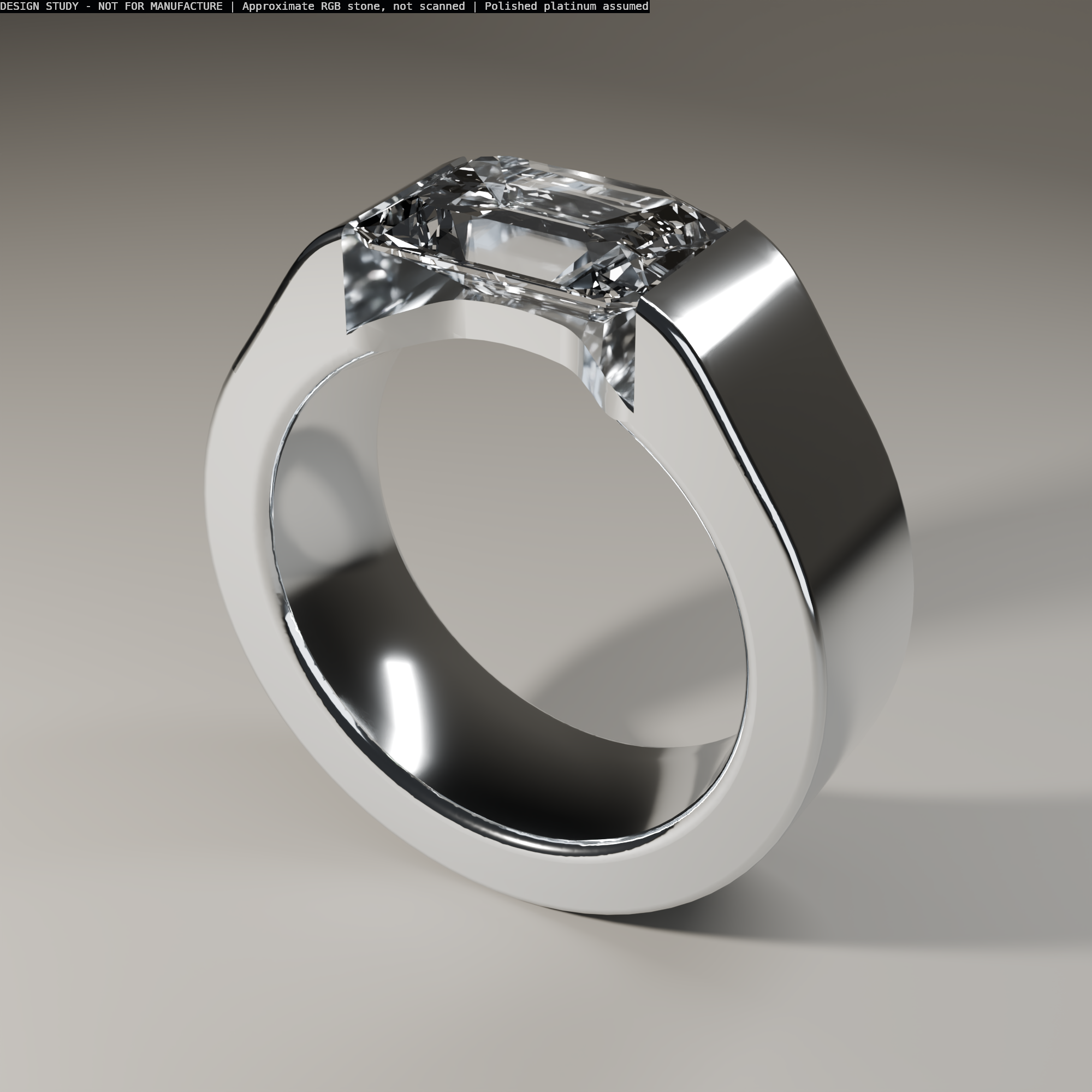
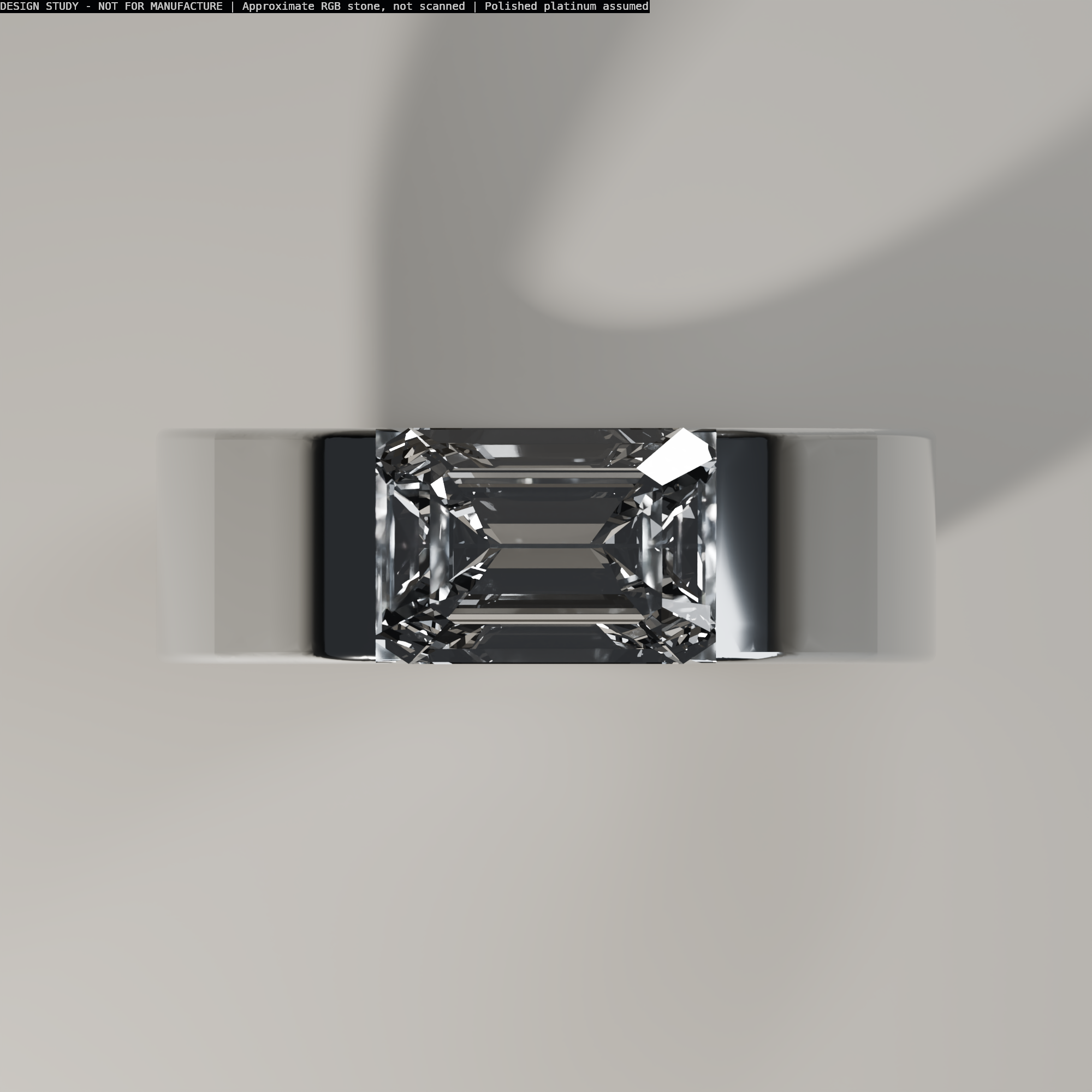
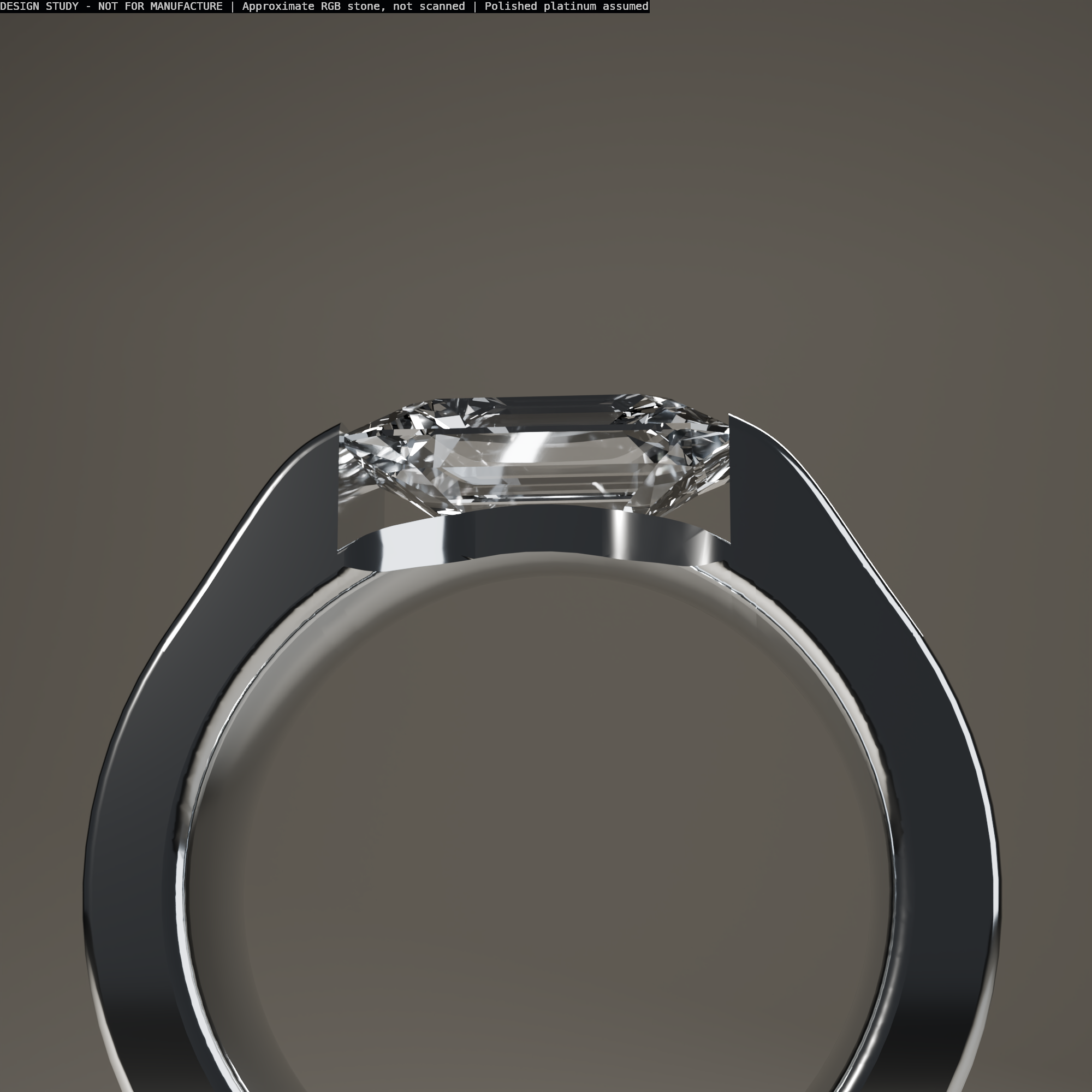
Physically based RGB rendering, not a prediction of this diamond's brilliance or fire. No spectral dispersion, actual stone scan or measured platinum optical response. Original ring and stone geometry unchanged; no refined-profile rendering or structural analysis is implied. Original render provenance.
ABOUT THE GEOMETRY
Geometry before appearance.
Every profile uses locally shaped ends and a band width matching the selected stone width. Compare the original geometry with refined under-finger tapers, longer shoulder transitions and softened edges. The refined pocket raises the stone to allow more backing and clearance.
Measured envelope, approximate facets
The three real diamond candidates use certificate envelopes and reported crown/pavilion percentages. Unmeasured facets, corner cuts and girdles remain approximate. Platinum, brushed-metal and diamond appearance are illustrative; this viewer does not validate optics or replace inspection of a real stone.
Nominal seats, not engineered retention
Nominal seats are cut to approximate stones, not purchase-specific scans. The hidden bridge has a narrower curved waist with smooth flares into the band and a comfort-fit underside. Its relieved pocket clears the keel and lower pavilion rather than bearing against them. Optical appearance, cleaning access and strength need real-stone and setting review. No profile has validated retention, contact pressure, preload or manufacturing safety. No structural analysis of the refined profiles is presented here.
Bridge and pocket-floor dimensions are study assumptions, not structural minima. “Hidden” means tucked underneath, not guaranteed invisible through real diamonds. Inspect the underside and optional sections.
A generic sense of scale
The finger and full hand are procedural context at millimetre scale, not a personal scan. They cannot establish personal fit, comfort or wearable clearance.